
My Top 10s
A personal map of the books, films, music, games, places and poems I keep returning to, and what those choices reveal about the stories I most want to tell.
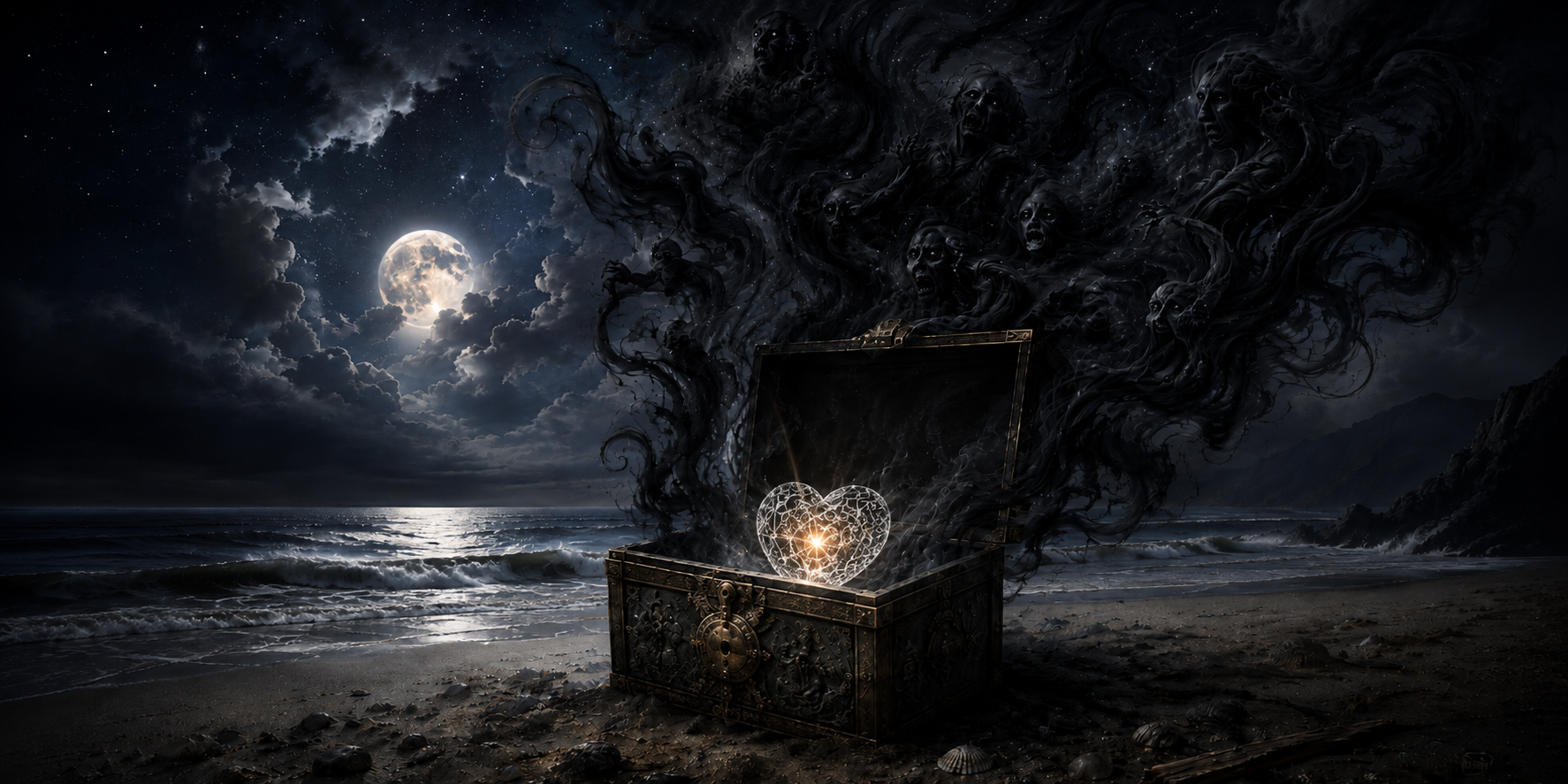
The stories, places and art that move me
“Remember, give and receive with all of your heart, follow your passions wherever they lead and radiate what got caught in the box.”
These lists are not an attempt to define the greatest books, films, games, places or poems ever made. They are a personal map of the things I return to, the things that make me laugh, the things that make me want to travel, and the things that still have the power to crack something open emotionally. Taken together, they reveal the kinds of stories I may ultimately want to tell myself.
Favourite Books
These books point towards enormous imagined worlds, mythic structures and ideas that remain playful enough to be lived in. They suggest a preference for stories that reward curiosity, rereading and philosophical argument without abandoning adventure.
| # | Title | Why it belongs here | Link |
|---|---|---|---|
| 1 | The Hitchhiker's Guide to the Galaxy – Douglas Adams | A cosmic road trip whose absurdity never cancels its melancholy, curiosity or affection for flawed people. | Source |
| 2 | Dune series – Frank Herbert | Epic scale, ecology, religion, power and prophecy are fused into a world where every victory has a moral cost. | Source |
| 3 | The Many-Coloured Land – Julian May | Adventure, time travel, strange powers and a mythic prehistory combine with a wonderfully eccentric ensemble. | Source |
| 4 | The Hero with a Thousand Faces – Joseph Campbell | A map of recurring mythic patterns that treats the journey as both external adventure and internal transformation. | Source |
| 5 | Rivers of London – Ben Aaronovitch | Modern London becomes a living magical landscape, mixing mystery, wit, history and the supernatural. | Source |
| 6 | VBT | This remains the shorthand from the original handwritten list. I have kept it exactly as recorded rather than guessing what it stands for. | — |
| 7 | Zen Mind, Beginner's Mind – Shunryu Suzuki | A quiet counterweight to the epics: attention, presence, practice and learning to meet the world without clinging. | Source |
| 8 | The Lord of the Rings – J. R. R. Tolkien | Fellowship, courage, home, temptation, grief and the cost of carrying something terrible through a beautiful world. | Source |
| 9 | The Earthsea Cycle – Ursula K. Le Guin | A fantasy of names, balance, mortality and self-knowledge in which wisdom often means accepting limits. | Source |
| 10 | Jonathan Strange & Mr Norrell – Susanna Clarke | Dry British wit, uncanny magic, scholarship and social satire turn alternate history into something strange and deeply atmospheric. | Source |
Favourite Television
The television list is strikingly British in its humour and scepticism, then expands into long-form science fiction. Its common thread is people trapped inside systems they can see are absurd, dangerous or morally compromised, and trying to remain human anyway.
| # | Title | Why it belongs here | Link |
|---|---|---|---|
| 1 | Blake's 7 – created by Terry Nation | Rebellion, loyalty and moral compromise unfold aboard a stolen starship, with heroes who are rarely cleanly heroic. | Source |
| 2 | Blackadder – created by Richard Curtis and Rowan Atkinson | History becomes a vehicle for razor-sharp cynicism, verbal cruelty, absurd institutions and occasional flashes of real pathos. | Source |
| 3 | Doctor Who | At its best it is a machine for wonder: a traveller, a companion, a strange place, a moral problem and the possibility of choosing kindness. | Source |
| 4 | Babylon 5 – created by J. Michael Straczynski | A long-form political and spiritual epic about war, choice, prophecy and people struggling to become better than their systems. | Source |
| 5 | Fawlty Towers – created by John Cleese and Connie Booth | Human vanity and social panic become escalating farce, with tiny lies turning into magnificent disasters. | Source |
| 6 | Peep Show – created by Jesse Armstrong and Sam Bain | Brutally intimate comedy exposes self-deception, longing and social failure from inside the characters’ own heads. | Source |
| 7 | Red Dwarf – created by Rob Grant and Doug Naylor | Cosmic loneliness is converted into jokes, friendship and philosophical science-fiction problems. | Source |
| 8 | Yes Minister / Yes, Prime Minister – created by Antony Jay and Jonathan Lynn | A masterclass in satire about the gulf between institutions, ideals and what people actually do to preserve power. | Source |
| 9 | Star Trek: The Next Generation – created by Gene Roddenberry | Optimistic science fiction tests ethics through encounters with the unknown and imagines civilisation as something we can consciously improve. | Source |
| 10 | Black Books – created by Dylan Moran and Graham Linehan | Books, booze, friendship and misanthropy collide in a small shop where adulthood is treated as a largely optional activity. | Source |
Favourite Movies
These are films I enjoy as complete experiences: pace, dialogue, worlds, adventure, style and humour. They favour unforgettable voices and situations over polite realism. Jaws and Alien remain strong working contenders outside the current ten.
| # | Title | Why it belongs here | Link |
|---|---|---|---|
| 1 | Pulp Fiction – directed by Quentin Tarantino | Violence, coincidence and pop-culture chatter become a nonlinear comic morality tale about people making choices under pressure. | Source |
| 2 | The Empire Strikes Back – directed by Irvin Kershner | Adventure darkens into loss, revelation and temptation, proving that an epic can deepen when the heroes fail. | Source |
| 3 | Monty Python's Life of Brian – directed by Terry Jones | Religious certainty, political factionalism and the human need to follow crowds are skewered without losing the warmth of absurdity. | Source |
| 4 | The Big Lebowski – directed by Joel Coen | A detective plot collapses into a shaggy, funny meditation on friendship, identity and simply abiding through chaos. | Source |
| 5 | The Princess Bride – directed by Rob Reiner | Romance, swashbuckling, friendship, revenge and self-aware humour are held together by complete sincerity about love. | Source |
| 6 | Lock, Stock and Two Smoking Barrels / Snatch – directed by Guy Ritchie | Criminal schemes, coincidence, fast dialogue and comic incompetence make intrigue feel like a machine constantly eating its operators. | Source |
| 7 | The Fifth Element – directed by Luc Besson | Operatic science fiction, visual excess and comedy ultimately hinge on the unfashionable proposition that love matters. | Source |
| 8 | Blade Runner – directed by Ridley Scott | A noir investigation becomes a meditation on memory, empathy, artificial life and what gives a finite existence meaning. | Source |
| 9 | Raiders of the Lost Ark – directed by Steven Spielberg | The pure adventure template: travel, ancient mysteries, danger, wit, momentum and a hero who survives partly through nerve and luck. | Source |
| 10 | Stardust – directed by Matthew Vaughn | A quest through a magical world becomes a funny, romantic story about discovering that what you thought you wanted was not the real treasure. | Source |
Strong contenders: Jaws; Alien.
Movies That Move Me
This is a different list from favourite films. These are stories that reach more directly into grief, love, purpose, courage, memory, mortality and the possibility of changing one’s life. The list currently has eleven contenders, so The Green Mile remains in the working longlist until the final cut.
Working longlist: final Top 10 ranking still to be decided.
| # | Title | Why it belongs here | Link |
|---|---|---|---|
| 1 | Local Hero – directed by Bill Forsyth | A gentle outsider arrives to change a place and discovers that the place may be changing him instead. | Source |
| 2 | The Razor's Edge – directed by John Byrum | A search for meaning after trauma asks what success is worth when the soul wants something else. | Source |
| 3 | Gladiator – directed by Ridley Scott | Grief, honour, corruption and revenge become a story about retaining humanity when power has stripped almost everything else away. | Source |
| 4 | Eternal Sunshine of the Spotless Mind – directed by Michel Gondry | Love and pain are inseparable from memory, and erasing suffering may also erase what made a life precious. | Source |
| 5 | Amélie – directed by Jean-Pierre Jeunet | Loneliness is answered through curiosity, small acts of kindness and the courage to stop observing life from a distance. | Source |
| 6 | Good Will Hunting – directed by Gus Van Sant | Intelligence is not enough: connection, vulnerability and the willingness to risk a different life are the real challenge. | Source |
| 7 | Dead Poets Society – directed by Peter Weir | Beauty, friendship and mortality turn education into a demand to live deliberately rather than merely obey. | Source |
| 8 | A Few Good Men – directed by Rob Reiner | Truth and institutional loyalty collide in a courtroom story about responsibility, moral courage and the seduction of certainty. | Source |
| 9 | Cocoon – directed by Ron Howard | Ageing, friendship and mortality are approached with warmth, wonder and the fantasy of being offered more life. | Source |
| 10 | The Mission – directed by Roland Joffé | Beauty, faith, guilt, colonial violence and impossible moral choices meet in a story that refuses easy consolation. | Source |
| 11 | The Green Mile – directed by Frank Darabont | Compassion and injustice meet the supernatural in a story about what goodness can and cannot save. | Source |
Bands and Artists
The music list spans rock, reggae, folk, soul and songwriters, but the emotional logic is consistent: atmosphere, yearning, travel, protest, humour, transcendence and songs that can hold joy and sorrow at the same time.
| # | Title | Why it belongs here | Link |
|---|---|---|---|
| 1 | Pink Floyd | Atmosphere, alienation, mortality and huge sonic landscapes turn private feeling into something almost architectural. | Source |
| 2 | U2 | Anthemic music combines spiritual hunger, politics, friendship and the stubborn desire to reach beyond oneself. | Source |
| 3 | Led Zeppelin | Mythic imagery, blues, power and mystery make the music feel simultaneously ancient and enormous. | Source |
| 4 | Dire Straits | Storytelling, restraint and Mark Knopfler’s guitar turn ordinary lives and places into cinematic scenes. | Source |
| 5 | The Beatles | Melody, experimentation, humour and emotional directness demonstrate how playfulness and depth can coexist. | Source |
| 6 | Bob Marley & The Wailers | Warmth, resistance, spirituality and communal rhythm make hope feel active rather than sentimental. | Source |
| 7 | The Police / Sting | Tension, intelligence and melodic precision sit beside songs about desire, distance, conscience and observation. | Source |
| 8 | The Pogues | Raucous humour, poetry, exile, drink, love and grief create songs that can sound celebratory and heartbroken at the same time. | Source |
| 9 | Van Morrison | Soul, memory, landscape and transcendence repeatedly turn streets, rivers and ordinary moments into spiritual territory. | Source |
| 10 | Paul Simon / Simon & Garfunkel | Precise songwriting joins travel, friendship, melancholy, humour and close observation of ordinary human lives. | Source |
Games
These games reveal a love of agency. The best worlds are not corridors through someone else’s plot; they are places to inhabit, test, get lost in and sometimes break. Exploration, systems, moral ambiguity and emergent stories matter repeatedly.
| # | Title | Why it belongs here | Link |
|---|---|---|---|
| 1 | Skyrim – Bethesda Game Studios | Freedom to wander matters as much as the main quest; mountains, ruins and accidental stories make exploration itself the reward. | Source |
| 2 | The Witcher 3 – CD Projekt Red | A traveller moves through morally complicated stories where monsters are often easier to understand than people. | Source |
| 3 | Fallout – Bethesda / Interplay lineage | Dark satire, ruined worlds and player choice turn survival into a comedy about the absurd systems people rebuild after catastrophe. | Source |
| 4 | Ultima Underworld – Blue Sky Productions / Looking Glass lineage | One of the foundations of immersive first-person worlds, rewarding curiosity, experimentation and inhabiting a place rather than merely clearing levels. | Source |
| 5 | System Shock – Looking Glass Technologies | Exploration, atmosphere and an unforgettable hostile AI make the environment itself part of the story. | Source |
| 6 | Diablo – Blizzard Entertainment | A dark world, relentless descent and the pleasure of discovery turn repetition into a compelling ritual of danger and reward. | Source |
| 7 | X-COM / UFO: Enemy Unknown – Mythos Games / MicroProse | Strategy creates emergent stories of loss, improvisation and attachment to people who begin as anonymous units. | Source |
| 8 | Elite – David Braben and Ian Bell | A huge navigable universe made freedom, trade, risk and self-directed adventure the point rather than a prescribed story. | Source |
| 9 | Deus Ex – Ion Storm | Conspiracy, augmentation and freedom of approach turn every level into an argument about power, truth and player agency. | Source |
| 10 | Castle Wolfenstein – Muse Software | An early stealth-action game whose improvisational infiltration helped establish a kind of play built around systems rather than a single correct route. | Source |
RPG, Tabletop Systems and Worlds
Tabletop games add an important ingredient that solitary media cannot: shared imagination. Rules create the boundaries, but the real pleasure is exploring a world with other people and discovering a story none of them completely controlled.
| # | Title | Why it belongs here | Link |
|---|---|---|---|
| 1 | Shadow World – Iron Crown Enterprises | A vast fantasy setting where ancient technology, magic, cultures and deep history reward exploration and world-building. | Source |
| 2 | Space Master – Iron Crown Enterprises | Detailed science-fiction role-playing offers huge scope for travellers, strange worlds and technically grounded adventure. | Source |
| 3 | Traveller – originally designed by Marc Miller | Perhaps the purest tabletop expression of wandering between worlds, taking jobs, meeting cultures and making a life through travel. | Source |
| 4 | Rolemaster – Iron Crown Enterprises | Granular rules make choices, danger and consequences feel concrete while supporting enormous fantasy settings. | Source |
| 5 | Magic: The Gathering – created by Richard Garfield | A game built from worlds, archetypes, colour philosophies and combinations, where collecting ideas is as important as winning. | Source |
| 6 | Talisman – originally designed by Robert Harris | A board-game quest in its most recognisable form: wander, encounter, acquire, suffer, laugh and somehow reach the centre. | Source |
| 7 | Dungeons & Dragons – created by Gary Gygax and Dave Arneson | Collaborative adventure makes story an activity shared with other people rather than something passively consumed. | Source |
| 8 | Middle-earth Role Playing (MERP) – Iron Crown Enterprises | Tolkien’s world filtered through Rolemaster created a bridge between beloved myth and the freedom to make new journeys inside it. | Source |
| 9 | Warhammer Fantasy Battle – Games Workshop | Dark humour, grotesque institutions, huge armies and a world permanently on the edge of catastrophe make apocalypse strangely playful. | Source |
| 10 | Doctor Who and the Daleks board game | A childhood-style collision of science fiction, Daleks, travel and tabletop play that belongs here as much for imaginative memory as mechanics. | Source |
Favourite Places I Have Visited
The visited places are not mainly luxury destinations. They are places where landscape, history, myth, ecology or civilisation becomes palpable. This working list currently has eleven contenders, which is useful: the final ranking should be about emotional significance rather than forcing an arbitrary cut too early.
Working longlist: final Top 10 ranking still to be decided.
| # | Title | Why it belongs here | Link |
|---|---|---|---|
| 1 | Siena, Italy | A medieval city whose streets, stone and civic history make the past feel physically present. | Source |
| 2 | Iguazú Falls | Scale, water and rainforest produce the kind of overwhelming natural spectacle that makes human concerns feel briefly smaller. | Source |
| 3 | Paris, France | Art, history, streets, food and accumulated human culture make wandering itself part of the experience. | Source |
| 4 | Serifos, Greece | An island landscape where sea, simplicity, mythic associations and distance from ordinary routine create space to breathe. | Source |
| 5 | Knossos, Crete | Myth and archaeology overlap so strongly that Minos, labyrinths and actual ruins seem to inhabit the same ground. | Source |
| 6 | Whitsunday Islands, Australia | Water, islands and tropical scale offer the direct physical wonder of being inside a landscape rather than observing it. | Source |
| 7 | Angkor, Cambodia | Jungle, stone, religion and empire combine into one of the clearest examples of time swallowing a civilisation without erasing its beauty. | Source |
| 8 | Galápagos Islands, Ecuador | Evolution becomes visible in volcanic landscapes and extraordinary wildlife, turning natural history into direct experience. | Source |
| 9 | Egypt | Ancient civilisation, desert, monumental architecture and mythology create a sense of time almost too large to hold in one visit. | Source |
| 10 | New Zealand | Mountains, coast, forests and open space offer the sense of movement through a world built for journeys. | Source |
| 11 | Machu Picchu + Sacred Valley, Peru | High landscape, pilgrimage, archaeology and the remains of a sophisticated civilisation make geography and history inseparable. | Source |
Places I Want to See
The future travel list keeps returning to pilgrimage, ancient cities, mountains, islands, desert and cultures with long visible histories. It currently has twelve contenders. The shared desire is not simply to consume sights, but to enter places that change scale, perspective or rhythm.
Working longlist: final Top 10 ranking still to be decided.
| # | Title | Why it belongs here | Link |
|---|---|---|---|
| 1 | Kyoto, Japan | Temples, gardens, ritual, craft and a living relationship with history make it a natural fit for a love of beauty and contemplative culture. | Source |
| 2 | Iceland | Volcanoes, waterfalls, ice and immense open space promise the sublime almost everywhere. | Source |
| 3 | Camino de Santiago, Spain | A journey whose meaning comes from walking it day after day, with destination, fellowship and reflection bound together. | Source |
| 4 | Hawaii, USA | Volcanic landscapes, ocean, ecology and Polynesian culture combine travel with elemental nature. | Source |
| 5 | Himalayas | Mountains at a scale that naturally invites awe, pilgrimage and a changed sense of one’s place in the world. | Source |
| 6 | Central America | A broad future journey through rainforest, volcanic landscapes, living cultures and Maya history rather than a single destination. | Source |
| 7 | Yellowstone, USA | Wildlife, geothermal landscapes and enormous protected spaces offer a direct encounter with a planet that is still visibly alive. | Source |
| 8 | China | The attraction is scale: civilisation, philosophy, mountains, ancient cities and radically different landscapes gathered inside one journey. | Source |
| 9 | Prague, Czechia | Architecture, old streets, literary history and a slightly uncanny atmosphere make the city feel made for wandering. | Source |
| 10 | Scotland | Landscape, islands, history, music and weather promise a journey where place and story are inseparable. | Source |
| 11 | Morocco + Atlas Mountains / Sahara | Medinas, mountains and desert create radical changes of texture and scale within one trip. | Source |
| 12 | Samarkand & the Silk Road, Uzbekistan | Trade, empire, religion and astonishing architecture make the Silk Road feel like a physical map of cultures meeting one another. | Source |
My Top 10 Favourite Poems
The poetry list sharpens the whole project. It contains travellers, sea roads, rebellious heroes, absurd old men, lost glory, impossible courage and choices whose meaning changes with time. The Isles of Greece now sits at number six, followed by Robert Frost’s The Road Not Taken.
| # | Title | Why it belongs here | Link |
|---|---|---|---|
| 1 | Ulysses – Alfred, Lord Tennyson | A restless old hero refuses to let age turn experience into passivity; the journey remains a way of being alive. | Source |
| 2 | The Guest House – Rumi | Every feeling is treated as a visitor to be met rather than an enemy to be expelled. | Source |
| 3 | The Charge of the Light Brigade – Alfred, Lord Tennyson | Rhythm, courage and catastrophe turn a disastrous charge into a haunting meditation on action and sacrifice. | Source |
| 4 | The Highwayman – Alfred Noyes | Love, danger, moonlight, betrayal and death arrive as a propulsive narrative ballad. | Source |
| 5 | Sea-Fever – John Masefield | The sea is not scenery but a call to movement, freedom and return to the road of wind and water. | Source |
| 6 | The Isles of Greece – Lord Byron | A song within Don Juan that mixes beauty, lost glory, history and the political longing for Greek freedom. | Source |
| 7 | The Road Not Taken – Robert Frost | Choice becomes a story we tell ourselves about identity, consequence and the path we did not live. | Source |
| 8 | The Congo – Vachel Lindsay | A historically influential performance poem whose force comes from rhythm and sound, while its racial imagery also deserves critical historical context. | Source |
| 9 | You Are Old, Father William – Lewis Carroll | Nonsense poetry turns age, authority and solemn moral instruction upside down through escalating absurdity. | Source |
| 10 | Lochinvar – Sir Walter Scott | A galloping romantic ballad of nerve, timing and escape, built around a hero who simply acts while everyone else hesitates. | Source |
Top 10 Poems to Read
These are poems I have not yet made part of my personal canon, but they are unusually well aligned with the themes already present: journey, belonging, loss, nature, endurance and returning to oneself.
| # | Title | Why it belongs here | Link |
|---|---|---|---|
| 1 | Ithaka – C. P. Cavafy | Perhaps the clearest poetic companion to this whole collection: value lies in the journey, what it teaches and what one becomes along the way. | Source |
| 2 | Wild Geese – Mary Oliver | A poem about belonging to the natural world without first becoming perfect. | Source |
| 3 | The Journey – Mary Oliver | A quiet declaration that there comes a point when one must hear one’s own life beneath the demands and voices around it. | Source |
| 4 | Love After Love – Derek Walcott | A future reunion with oneself is imagined as something tender, celebratory and almost domestic. | Source |
| 5 | The Layers – Stanley Kunitz | A life of losses still contains a continuing thread, and identity can survive repeated transformation. | Source |
| 6 | Kindness – Naomi Shihab Nye | Kindness is presented not as niceness but as something learned through loss and recognition of shared fragility. | Source |
| 7 | The Peace of Wild Things – Wendell Berry | Anxiety is interrupted by entering the physical presence of water, birds and the non-human world. | Source |
| 8 | Do Not Go Gentle into That Good Night – Dylan Thomas | Love and mortality become a fierce refusal to surrender quietly. | Source |
| 9 | Invictus – William Ernest Henley | A compact statement of endurance, self-command and dignity under pressure. | Source |
| 10 | When You Are Old – W. B. Yeats | Love is viewed from the far side of time, distinguishing attention to the soul from attention to beauty. | Source |
The story underneath the lists
Taken together, these lists look less like a catalogue of favourite things and more like a personal mythology. The repeated figure is the traveller: sometimes a hero, sometimes an exile, sometimes a fool, sometimes all three. He leaves because staying is impossible, encounters worlds that expose his assumptions, and discovers that neither escape nor conquest is enough.
The humour matters because it protects the story from self-importance. Douglas Adams, Blackadder, Life of Brian, Red Dwarf, The Big Lebowski, Peep Show and The Pogues all understand that people can be absurd at precisely the moment they are most sincere. Satire is therefore not an optional flavour. It is one of the ways truth gets into the story.
The darkness matters too. Empire, war, betrayal, death, loneliness, corruption and grief appear throughout the lists. Yet the favourites are rarely nihilistic. The Green Mile still values compassion. Blade Runner still finds wonder in finite life. The Lord of the Rings returns to friendship and home. Good Will Hunting asks whether a frightened person can risk being known. The Mission refuses an easy victory but does not make moral courage meaningless.
The travel choices reinforce the same architecture. Ancient ruins, islands, mountains, waterfalls, deserts and pilgrimage routes are places where human scale changes. They make history visible and invite the traveller to become temporarily less central. That is fertile ground for both spiritual seriousness and comedy.
If a novel or film grows out of this material, its deepest question may not be “How does the hero win?” but “After everything he has seen, lost, laughed at and loved, what is worth coming home to?” That question can carry adventure, satire, intrigue, romance, philosophy, danger and wonder without forcing any of them to become the whole story.
Adventure gets the traveller moving. Wonder keeps him looking. Humour keeps him human. Love and belonging give the journey somewhere to return to.
What the lists reveal
The strongest pattern is not a genre. It is a movement between states: leaving and returning, belonging and exile, laughter and grief, control and freedom, civilisation and wilderness. The favourite works repeatedly use adventure as the engine, but home, connection and meaning as the deeper emotional destination.
- Home, belonging and return. Again and again the central question is not simply where the hero goes, but where the hero belongs. The Lord of the Rings begins and ends with home; Local Hero is about being changed by a place; The Witcher 3, Traveller and the Camino are all journeys whose meaning depends on the people and places encountered. Even the most cosmic favourites keep circling back to the need for somewhere, or someone, that feels like home.
- Journey, wandering and discovery. Ulysses, Sea-Fever, The Road Not Taken, Raiders of the Lost Ark, Doctor Who, Elite, Skyrim and the travel lists all make movement itself meaningful. The journey is not merely transport between plot points. It is the method by which the character learns, changes, gets lost and encounters the unexpected.
- Freedom and self-determination. The lists distrust systems that tell people exactly who they must be. Blake’s 7, Yes Minister, Dune, Deus Ex and Fallout all explore institutions, power and manipulation. Good Will Hunting, Dead Poets Society and Amélie bring the same conflict inward: the danger of living according to fear, expectation or habit instead of choosing one’s own life.
- Myth, spirituality and the search for meaning. Campbell, Earthsea, Dune, Zen Mind, Rumi, The Mission, Knossos, Egypt and the Himalayas show a recurring hunger for the sacred without requiring simple answers. Myth matters because it lets personal struggle become larger than autobiography while still remaining recognisably human.
- Humour beside darkness. Hitchhiker’s, Blackadder, Life of Brian, The Big Lebowski, Red Dwarf, Peep Show, The Pogues and Warhammer all refuse the idea that seriousness must be solemn. Dark humour does not trivialise pain. It creates enough distance to look at absurdity, hypocrisy and catastrophe without being flattened by them.
- Fellowship, chosen family and compassion. The most affecting stories rarely leave the protagonist alone. Fellowship, crews, companions, friends and unlikely allies repeatedly make survival possible. This is visible in The Lord of the Rings, Babylon 5, Star Trek, Good Will Hunting, Cocoon, X-COM and tabletop role-playing itself, where the story literally exists because people show up together.
- Moral courage against systems of power. A Few Good Men, The Mission, Gladiator, Blake’s 7, Dune and Babylon 5 all ask what a person owes truth when institutions reward obedience. The attraction is not invulnerability but the moment someone decides there is a line they will not cross.
- Wounded, clever outsiders. Many favourites centre on people who are funny, capable or perceptive but do not fit cleanly into the world around them. The Doctor, Will Hunting, Deckard, the Dude, Geralt and Douglas Adams’s bewildered travellers all see systems partly because they stand at an angle to them.
- Mortality, memory and impermanence. Eternal Sunshine, Blade Runner, Cocoon, The Green Mile, Ulysses, When You Are Old and Zen Mind all return to the fact that things end. The emotional force comes not from defeating impermanence, but from asking how love, memory and attention change once finitude is accepted.
- Wonder and the sublime. The travel list makes this literal: Iguazú, Galápagos, Machu Picchu, Angkor, Iceland, Yellowstone and the Himalayas. The same appetite exists in fantasy and science fiction. Vastness is not decorative. It changes perspective.
- Intrigue, irony and hidden structures. Dune, Deus Ex, Pulp Fiction, Snatch, Jonathan Strange & Mr Norrell and Yes Minister all reward the pleasure of discovering that the visible situation is not the whole situation. Plots are more satisfying when characters have agendas, systems have incentives and irony exposes the gap between what people say and what they actually want.
- Redemption without sentimentality. The favourites tend to resist easy cures, but they do allow second chances. The Green Mile, Good Will Hunting, The Mission, The Razor’s Edge and even The Fifth Element are interested in whether damaged people can still choose love, courage or compassion. Hope is strongest here when it has been earned rather than promised.
The creative centre of gravity
Adventure is the preferred story engine, but belonging is the deeper emotional centre. The ideal story therefore looks less like a straight heroic conquest and more like an odyssey: a clever, wounded traveller moves through strange places, absurd systems and dangerous moral choices, gathers companions, loses things, laughs at the madness, and gradually discovers what home actually means.
I want to live open-hearted: to love and be loved, to wander, wonder, create, laugh, and stand kindly beside others. I cherish friendship, beauty, truth, music, wild places, shared journeys, and the small sacred moments that make life feel larger than fear. My purpose is not to conquer life, but to meet it fully, with courage, gratitude and love.

Comments
Anyone can read. Approved members can comment. or open the join page.
Your membership is waiting for approval. You can read the thread now.
If the box below shows Sign In, choose it, then Sign In with Froodx. Once is enough.
Opened from Facebook or another app? Google does not allow sign-in inside an app's built-in browser. To comment, tap the ⋯ menu, choose Open in browser, and sign in there.